introduction to the unified skills map
Authors: Dr. Marouane Khallouk and Dr. Rajaa El Mezouaghi

introduction
“Which company offers the best smartphones? Apple? Samsung? ; What is the best cuisine? Mediterranean? Asian?”
Ask these types of questions anywhere in the world and you will quickly find yourself caught in an endless debate, with no clear consensus. It is indeed rare to find a question that generates the same answer across cultures and countries… unless you walk into almost any university and ask students a much simpler question:
“Why are you here? Why are you studying?”
Whether you are in Europe, America, Africa, Asia or Australia, the answer will most likely converge around the same idea:
“To prepare myself to build my career.”
Across countries and higher education systems, employability consistently emerges as the primary objective students associate with their studies. Data from the International Student Barometer, based on more than 192,000 responses across 24 countries, shows that future career impact is the leading reason students choose a higher education institution (International Student Barometer, 2024). The increasing focus on employability in higher education has been widely documented in research (Tight, 2023 ; Healy, 2023). Despite the major concern about employability, a skills gap between higher education and industry continues to be frequently reported (Osmani et al., 2019, OECD, 2017, McGuiness et al. 2018, Rikala et al. 2018, WEF, 2025). This paradox naturally raises the question:
Who is the culprit behind the skills gap?
Higher education institutions? Students? Employers?
If the skills gap were a crime scene, the investigation would quickly become complicated. Each actor could plausibly be holding the shovel used to dig the gap.
- Universities are sometimes criticized for curriculum perceived as too theoretical, too slow to evolve, or disconnected from rapidly changing professional realities. Academic traditions, institutional structures and teaching methods are frequently questioned.
- Students, too, are not beyond suspicion. Some could argue that many arrive insufficiently prepared, show limited engagement with their studies, or expect universities to deliver employability almost as a guaranteed outcome rather than as the result of sustained effort.
- Employers, for their part, are accused of expecting too much from graduates while offering entry-level jobs that are not rewarding enough and leave little time or support for learning and development.
In this investigation, each actor can point to the others. Universities blame unrealistic expectations. Employers blame outdated education. Students blame both.
Over the past few years, we have explored this question extensively, and the conclusion is probably not what most people expect.
1. toward an (un)usual suspect
1.1. The experimentation
Our investigation began with a simple experiment that we repeat in our university classes at least once every semester.
One day during the term, whether in an undergraduate or a postgraduate course, we begin the session with a simple instruction: “Take one blank sheet of paper.” In a university classroom, that sentence alone is enough to make more than a few students uncomfortable, as a blank sheet of paper often signals the beginning of a surprise test. Yet this time there is no exam and no hidden question. Instead, we simply ask them to spend the next hour filling the A4 sheet in front of them with a list of all their skills.
What follows is remarkably consistent across cohorts. The first reaction is almost always relief. Students smile, shoulders relax, and the tension that had briefly appeared in the room disappears. After all, listing one’s own skills should not be particularly difficult.
Yet within a few minutes something begins to change. Pens slow down and eyes move away from the paper, drifting toward the ceiling or toward neighbouring desks. Ten or fifteen minutes pass, and many sheets remain largely blank, interrupted only by a few isolated words written here and there. The room becomes quiet in a different way. It feels less like the quiet of concentration and more like the quiet of people who know they should have something to write but are unsure how to begin. As the minutes pass, the initial relief that the exercise was not a surprise test slowly fades, and the blank sheet of paper begins to feel more intimidating than the exam they feared at the beginning of the class. By that point, a few students jokingly admit that they might actually have preferred the surprise test after all.
When the hour ends, we collect the papers and ask a simple question to the class: “Who believes that the sheet you have just completed truly captures 100% of your value and potential?” Only one or two hands rise, and even those rarely rise with full conviction. We then ask the students how they felt during the exercise. The answers quickly reveal a shared experience. One student remarks, somewhat perplexed, “It feels strange. I know I can do many things, but I didn’t know how to express them as skills.” Another adds, “I have completed many projects at university and had some professional experience, but translating all of that into a clear skill set was much harder than I expected.” As more students speak, a common pattern emerges throughout the discussion: frustration. The frustration does not come from having nothing to offer. It comes from having knowledge, skills and experiences while struggling to capture them in a way that is clear, structured and comprehensive.
To deepen the reflection, we place all the A4 sheets on the board and examine them together. The visual result is quite telling. Only a small number of papers present a clearly organized representation of skills. Most sheets appear fragmented, filled with scattered words, long bullet lists without structure, or generic labels that could belong to almost anyone in the room. Many of the skills described remain vague and imprecise, offering little indication of what the student actually knows, what the student can actually do, or how these abilities might translate into professional value.
The most revealing moment of the exercise comes next. We ask students about the type of job they would ideally like to obtain after graduation, and then place their skill sheets next to real job descriptions for those roles. The contrast appears immediately. The two documents seem to come from different worlds. The way students describe their abilities rarely resembles the way employers describe the capabilities they are looking for. The gap extends well beyond wording. It feels as if the two sides are speaking different languages and referring to different realities.
The observation becomes even clearer when we extend the comparison. When we turn to the official learning outcomes of the students’ degree programs, which are supposed to describe the skills developed during their studies, we encounter yet another way of describing capabilities. Students describe their abilities according to one logic. Employers describe required capabilities according to another. Universities articulate learning outcomes according to a third. What appears here is a divergence of reference systems.
Placed side by side, the three descriptions create a powerful impression. Each uses its own structure and they seem to emerge from different conceptual worlds. It is almost as if one text were written in English, another in Chinese, and the third in French. Each attempts to describe human capabilities, yet without a shared reference structure the connection between them becomes difficult to see.
This is precisely what the classroom experiment showcases. The difficulty students experience extends well beyond articulation or self-reflection. It reflects a deeper structural problem. Students, universities and employers are all trying to describe human capabilities, yet they frequently rely on different conceptual foundations to interpret what we simply call “skills”.

1.2. Evidence that leads to the suspect’s composite sketch
Observations during the class experimentation are not anecdotal. What emerges from the classroom experiment echoes a broader debate that has been extensively discussed in research. Scholars studying labour markets and skills have long shown that difficulties in matching people to jobs arise both from missing capabilities and from the way those capabilities are defined, observed and communicated across institutions.
Long before the current debates on employability, Spence’s (1973) seminal theory of job-market signaling offered a powerful explanation of how education becomes connected to employment in labour markets. Employers cannot directly observe the real capabilities of candidates at the moment of recruitment. As a result, they rely on visible indicators to infer them.
Educational credentials thus function as signals. Degrees and qualifications do not reveal abilities directly, but suggest certain qualities about the individuals who hold them. By providing such signals, education helps reduce uncertainty in hiring decisions and facilitates the matching process between workers and jobs.
Yet this mechanism also reveals an important limitation. While credentials indicate potential qualities, they provide only a partial view of an individual’s actual capabilities and do not capture the full range of skills a person may possess.
As a result, hiring decisions often rely on signals that approximate ability rather than on a precise and shared understanding of what individuals truly know and are able to do.
Recent research on skills mismatch has reinforced this point from another angle. The concept of skills mismatch itself is broad, multidimensional and difficult to measure. (McGuinness and al. 2018 ; Rikala and al. 2024). Part of this difficulty stems from a deeper conceptual issue. The notion of skills carry different meanings across disciplines, institutions and policy contexts (Rodrigues et al. 2021 ; Green 2011).
One direct consequence is the emergence of a deeply fragmented landscape of skills taxonomies. Across education systems, labour markets and policy frameworks, there is no single shared structure that organizes how skills should be described, categorized or interpreted. Instead, multiple classification systems coexist, each developed for different objectives such as curriculum design, labour market analytics, workforce planning or policy reporting. While these frameworks can be useful within their own domains, collectively they produce a dispersed ecosystem in which the same capability may be labelled, grouped or interpreted in different ways depending on the institutional context (Joynes et al., 2019; Doherty and Zhang, 2026).
This fragmentation is first visible in the proliferation of terms used to describe human capabilities. It is easy to feel overwhelmed by the expanding vocabulary of skills: hard skills, soft skills, generic skills, transferable skills, transversal skills, technical skills, employability skills, life skills, future skills, 21st-century skills, human-centric skills, and many more. The list could go on for pages… [but we are running an investigation and by then the (un)usual suspect might already have slipped away]
These labels try to add nuance but hey often overlap, compete or circulate without clear conceptual boundaries. Doherty and Zhang (2026), for example, show that skills taxonomies in higher education are marked by inconsistent terminology, missing definitions and overlapping concepts, even when they attempt to address similar educational and employability concerns. Joynes et al. (2019) reach a comparable conclusion in the literature on 21st century skills, where broad agreement on the importance of new forms of learning coexists with the absence of a single shared definition or stable categorisation. In other words, the field has produced many names for skills, but not yet enough shared clarity about what these names actually mean.
This is not a minor semantic problem. The way skills are named shapes the way they are interpreted. A capability such as communication may be treated as a soft skill, a professional skill, a transversal competence, a human-centric skill or part of a 21st century skills framework. Depending on the taxonomy, it may include writing, oral presentation, listening, persuasion, negotiation, interpersonal influence or digital communication (Joynes et al., 2019; Aghazadeh, 2019; Doherty and Zhang, 2026).
The result is a paradox. There is growing convergence around a small number of important skills, but persistent divergence around how these skills should be defined, grouped and operationalised.
Consequently, the problem becomes even sharper when moving from naming skills to assessing them. A skill that cannot be clearly defined cannot be reliably measured. A skill whose boundaries are blurred cannot be easily distinguished from neighbouring skills. A skill whose components are not specified cannot be developed systematically. (Joynes et al., 2019; Aghazadeh, 2019; Doherty and Zhang, 2026).
The assessment difficulty is conceptual first, way before being technical. Before deciding how to assess collaboration, one must decide what collaboration actually includes. Is it participation? Conflict resolution? Shared decision-making? Leadership within a group? Listening? Contribution to collective output? Before assessing creativity, one must decide whether creativity refers to originality, usefulness, divergent thinking, problem reframing, innovation or openness to new ideas. Before assessing problem solving, one must decide whether the problem is individual or collaborative, structured or ill-structured, domain-specific or transferable. Aghazadeh (2019) shows that these distinctions matter because different definitions lead to different assessment designs. The weakness of skills assessment is therefore not simply that better tools are needed. It is that many systems try to assess constructs that are still insufficiently clarified.
Additionally, skills are not useful only because people possess them. They become employability assets when they can be recognized, evidenced, communicated and trusted. This is a critical distinction. A student may have developed analytical thinking through case analysis, collaboration through group projects, communication through presentations, adaptability through internships and self-regulation through managing deadlines. Yet if these capabilities remain unnamed, unstructured or poorly evidenced, they are invisible to the labour market. The student has value, but the value is not legible. The capability exists, but the signal is weak.
Therefore, numerous studies have highlighted how difficult it is for students around the world to translate the value of their learning journey into a clear set of skills that resonates with employers’ expectations and understanding (Doherty & Zhang, 2026; Rahman & Lakey, 2023; Tomasson et al., 2019; Pollard et al., 2015). In this sense, the skills gap could not be reduced to the lack of certain skills. Rather, many struggle because they lack a structured language shared with employers to identify, describe and communicate their skills in a clear and consistent way.
Students may describe themselves through isolated words such as “teamwork”, “communication” or “leadership”, while employers look for evidence of specific behaviours, contexts and outcomes. Universities may claim that these skills are embedded in learning outcomes, while students experience them as assignments, presentations, projects or assessments without always recognising the underlying skill architecture. Employers may say graduates are not ready, while what they actually observe is weak articulation, weak evidence or poor fit between academic language and workplace language. The gap is therefore not only between education and employment. It is between different systems of meaning.

1.3 The capture challenge
This brings us back to the central question of the skills gap debate: who is the culprit?
At first glance, the case seems straightforward. The suspects are well known, and each appears to have a plausible motive. Yet the closer the investigation gets to the evidence, the more the picture changes. The problem does not appear to originate from any single actor. Universities, students and employers are all navigating the same underlying difficulty:
A landscape of skills that remains poorly structured and difficult to navigate.
Of course, it would be naïve to assume that all actors are equally effective or equally committed. Each group carries its own share of responsibility, and examples of poor practices can be found across the system. Some programmes remain disconnected from professional realities, some students invest less effort than expected, and some employers formulate unrealistic or poorly defined expectations. In that sense, the investigation does reveal shortcomings among all parties.
Yet when one takes the time to look more closely, another picture emerges. Many students invest years in demanding programmes and accumulate a wide range of learning experiences. Universities design projects, assignments and pedagogical activities that develop valuable capabilities. Employers, for their part, often show genuine willingness to recruit, develop and reward talent. In conversations with these stakeholders, it becomes clear that each of them generates forms of value that could matter to the others.
The difficulty is that much of this value remains poorly captured, poorly translated or simply lost in the process. When one carefully reviews everything a student has actually done during their studies, many valuable capabilities emerge that employers could recognise and value. Similarly, universities often create rich learning experiences that could be transformed into clear and recognisable capability assets for the labour market. Employers themselves frequently show willingness to develop talent, yet they often lack the tools to precisely articulate the capabilities they truly need or to assess them in a consistent way.
If our main suspect of the skills gap is a skills landscape that remains poorly structured and difficult to navigate, a number of initiatives have attempted to capture it through large-scale taxonomies and skills infrastructures. These initiatives confirm that the fragmentation of skills language is widely recognised across governments, international organisations and labour-market actors. Yet they also illustrate how difficult it is to design a framework that is at once comprehensive, practical and easy to use.
At the international level, several large-scale initiatives have attempted to capture the suspect by structuring the language of skills. One of the most influential infrastructures is ESCO, the European classification of Skills, Competences, Qualifications and Occupations developed by the European Commission. ESCO provides a large-scale multilingual classification linking occupations with thousands of associated skills, with the aim of improving labour mobility, skills matching and interoperability between employment services, education systems and digital labour-market platforms (European Commission, n.d.).
However, the scale that makes ESCO powerful as a labour-market infrastructure also creates usability challenges. With thousands of occupations and skills, the framework functions efficiently as a classification system, but it can become difficult to navigate for individual users attempting to identify or articulate their capabilities.
Building on this type of infrastructure, the World Economic Forum later proposed its Global Skills Taxonomy, which explicitly draws on existing frameworks such as ESCO and O*NET to promote a more unified language for describing skills across labour markets (World Economic Forum, 2021). The initiative attempts to organise skills into clusters and levels of granularity that can support hiring, reskilling and workforce planning. In doing so, it aims to bridge different skills frameworks and align the supply and demand of capabilities across organisations and learning systems.
Yet this global ambition also reveals a limitation. While the taxonomy improves coordination at the system level, it remains primarily designed for workforce analytics and organisational strategy. As a result, it may still be difficult for students or educators to use directly when trying to identify and articulate skills developed through learning experiences.
National initiatives reveal similar dynamics. In Australia, the proposed National Skills Passport illustrates a different approach to the problem. Rather than focusing primarily on classification, the initiative aims to improve the visibility and portability of skills by enabling individuals to store, share and verify qualifications and capabilities through a trusted digital infrastructure (Australian Government Department of Education & Australian Government Department of Employment and Workplace Relations, 2024). Such systems seek to facilitate hiring processes, support workforce mobility and encourage lifelong learning by allowing individuals to present a consolidated record of their qualifications, experiences and skills.
However, skills passports primarily address the circulation of skills information rather than its conceptual organisation. While they may improve the accessibility and verification of credentials, they do not necessarily resolve how skills themselves should be defined, structured or assessed. Without a clear underlying framework, such systems risk becoming sophisticated containers for fragmented skills descriptions rather than structural solutions to fragmentation.
The United Kingdom has adopted a different approach through the development of a national Standard Skills Classification, which attempts to map occupational capabilities through a detailed hierarchy linking skill domains, skill groups, tasks and knowledge requirements (Department for Education, 2023; Skills England, 2026). Such systems can significantly improve labour-market intelligence by clarifying which skills are associated with specific occupations and economic sectors. Yet the analytical precision of these frameworks often comes at the cost of usability. Highly granular classifications may support policy analysis and workforce planning, but they can become difficult for students, educators or smaller organisations to navigate without expert mediation.
Taken together, these initiatives reveal a consistent pattern across both international and national scales. Large taxonomies tend to prioritise interoperability and labour-market analytics, while digital infrastructures focus on portability and credential visibility. Although each initiative captures an important dimension of the skills problem, none fully resolves the structural challenge. What remains missing is a framework capable of balancing several requirements simultaneously: simple enough to be easily understood and used by students, educators and employers alike; practical enough to support the description, assessment and development of skills in real situations; and at the same time comprehensive and systemic enough to capture the full landscape of human capabilities without collapsing into vague categories or becoming an overly complex taxonomy.
No small feat, right? That’s exactly the challenge we set out to address.
2. the unified skills map
The Unified Skills Map (USM) is a reference framework for articulating skills clearly and consistently across any context. Individuals and organizations can use the USM as a common structure to describe, assess, and develop skills. The USM is designed to be simple enough for practical use, yet comprehensive and systemic enough to capture the full landscape of human capabilities.
We argue that the whole skills system could be conceptualized around three main categories only while guaranteeing clarity, precision and comprehensiveness.
The first category refers to Practical Skills, which can be defined as the practical abilities to perform actions and achieve results in concrete situations. Practical skills therefore describe the practical tasks an individual is able to accomplish. Within the Unified Skills Map, practical skills are organized into three types.
- Practical Skills – Specific : These are the practical abilities to perform tasks in a particular job, profession or field.
- Practical Skills – General : These are the practical abilities that can be applied across many contexts and situations.
- Practical Skills – Technological : These are the practical abilities to use technological tools effectively.
The second category refers to Knowledge Domains, which can be defined as the content that an individual understands and can use to interpret situations. Knowledge domains therefore describe what an individual knows and understands about how things work. Within the Unified Skills Map, knowledge domains are organized into two types.
- Knowledge Domains – Conceptual : These are the knowledge domains that explain how things work and are structured at a general level.
- Knowledge Domains – Contextual : These are the knowledge domains that explain how things work in specific industries, organizations, cultures or real environments.
Finally, the third category refers to Generative Skills, which can be defined as the foundational mental and emotional capacities that power the development of practical skills and the acquisition of knowledge. Generative skills therefore describe the inner human capacities that enable learning and development. Within the Unified Skills Map, generative skills are organized into three types.
- Analytical Capacity : This is the capacity to critically process information and draw logical conclusions.
- Creative Capacity : This is the capacity to generate new ideas and transform them into meaningful concepts.
- Emotional Capacity : This is the capacity to manage one’s own emotions and respond effectively to the emotions of others.
Therefore, we define Skills as human capabilities that can be classified into three main forms: a practical ability to perform actions, domain knowledge, or a generative capacity that underpins the development of the other two.
2.1. The Practical Skills
The practical abilities to perform actions and achieve results in concrete situations.
Practical skills are the most visible dimension of human capability. They describe what a person is concretely able to do in real situations. Whether completing a financial analysis, negotiating with a client, managing a team, or operating a technological tool, practical skills transform knowledge and thinking into action and results.
Because they express capabilities through concrete action, practical skills also make performance observable and measurable. They are the actions that others can directly see and evaluate.
However, not all practical skills are of the same nature. Some are specific to a particular profession, others are transferable across contexts, and some relate to the effective use of technological tools. For clarity, the Unified Skills Map therefore distinguishes three types of practical skills.
2.1.1. Practical Skills – Specific
The ability to perform concrete actions that are specific to a particular job, profession, or field.
Specific practical skills are tied to the concrete activities that define a profession or domain of work. They correspond to the concrete tasks performed within a specific professional context.
For example, a financial auditor is able reviews accounts as part of an audit. A surgeon is able to perform medical procedures in a clinical setting. An architect is able to design buildings that meet structural, functional and regulatory constraints. A brand manager is able to design and manage a brand’s positioning in the market. In each case, the skill is inseparable from the professional activity itself.
Specific practical skills therefore anchor competence within a field of practice. They determine whether an individual can effectively perform the work expected in a given role or profession. In simple terms, they answer a decisive question: Can this person actually do the work required in this domain?
Because they are closely linked to professional standards, tools, and practices, specific skills evolve continuously as professions themselves change. Maintaining them therefore requires regular updating and continued learning.
Specific practical skills ultimately represent the visible expression of expertise within a domain.
Below are some examples of specific domain and related skills that may be required.


2.1.2. Practical Skills – General
The ability to perform concrete actions that can be applied across many contexts and situations
General practical skills refer to actions that individuals can perform effectively in a wide variety of professional and organizational contexts. Unlike specific practical skills, which are tied to particular domains or occupations, general practical skills are transferable and can be applied across many types of roles and environments.
These skills correspond to concrete actions that produce observable results, such as presenting information to an audience, organising tasks within a team, coordinating a project, writing a professional report, or facilitating a meeting. Because they involve actions with visible outcomes, they can be observed, assessed, and developed through practice.
While specific practical skills anchor performance within a particular field, general practical skills enable individuals to operate effectively across many roles and contexts, making them essential for professional versatility and adaptability.
The examples below illustrate how the same general practical skill can take different forms depending on the situation.

General practical skills may also include behaviours related to personal attitudes or dispositions. Qualities such as curiosity, confidence, proactivity, or enthusiasm are often described as attitudes personality traits or values. Within the Unified Skills Map, however, they can also be expressed as practical skills when they are formulated as observable actions.
For example, individuals may demonstrate curiosity, show enthusiasm, act proactively, or manage their confidence. In this context, the skill does not simply consist in possessing these qualities, but in being able to use them appropriately depending on the situation.
Managing confidence, for instance, means expressing it when needed while remaining able to question oneself. In the same way, curiosity should be exercised constructively, and enthusiasm should be expressed in a way that supports the activity rather than disrupts it. What defines the skill is therefore the ability to mobilize these qualities in the right way and in the right measure in real situations. For example:
- Demonstrate curiosity by asking thoughtful questions
- Manage confidence in a balanced way when expressing ideas
- Act proactively by initiating tasks without waiting to be asked
- Show enthusiasm when engaging in a project or activity
- Demonstrate persistence when facing difficulties
- Show openness to feedback and alternative perspectives
- Maintain focus and discipline when completing demanding tasks
- Demonstrate reliability by consistently fulfilling commitments
2.1.3. Practical Skills – Technological
The ability to effectively use technological or digital tools.
Technological practical skills refer to the ability to master the use of technological systems, software, or digital tools. In this category, the skill lies primarily in understanding how a particular tool works and being able to use it effectively.
Through this mastery, individuals can perform tasks and produce concrete outcomes using technological tools. Depending on the nature of the technology, these tasks may apply across many contexts or remain more specific to certain activities. For example, tools such as spreadsheet software or generative AI platforms can be used in a wide variety of contexts, while other technologies may be more closely associated with particular domains.
Technological practical skills therefore focus on the operational mastery of tools, enabling individuals to translate technological capabilities into effective actions and tangible results.

2.2. The Knowledge Domains
The structured bodies of knowledge that individuals understand and use to interpret situations.
Knowledge domains refer to the content that individuals know and understand about how things work. They include concepts, principles, theories, and explanatory frameworks that allow people to make sense of situations and understand the mechanisms behind events or phenomena.
While practical skills describe what a person is able to do, knowledge domains describe the understanding that supports action and decision-making. They provide the intellectual material through which individuals interpret information, analyse situations, and recognise patterns in the world around them.
Because they represent organised areas of understanding, knowledge domains make it possible to identify what individuals know and the areas in which their expertise is developed.
However, not all knowledge domains are of the same nature. Some explain how systems and mechanisms work at a general, conceptual level, while others explain how things function within specific environments such as industries, organisations, or cultural contexts. For clarity, the Unified Skills Map therefore distinguishes two types of knowledge domains
2.2.1. Knowledge Domains – Conceptual
Knowledge domains that explain how things work at a general level.
Conceptual knowledge domains refer to structured bodies of knowledge that explain the mechanisms, principles, and relationships that govern how systems operate. They provide general explanations of how things function, independently of any particular context or any specific environment.
These domains are typically organized around concepts, models, and theoretical frameworks that allow individuals to understand underlying structures and processes. For example, conceptual knowledge may include understanding economic supply and demand, the principles of human anatomy, the laws of physics, or the fundamental mechanisms of marketing and consumer behaviour.
Because they describe general mechanisms rather than specific environments, conceptual knowledge domains can often be applied across many different contexts. They provide the intellectual material that allows individuals to interpret situations, recognise patterns, understand why certain phenomena occur, and determine what actions may be appropriate in a given situation.
Without conceptual knowledge, understanding often remains limited to isolated observations or personal experience. Conceptual knowledge introduces structure and coherence by explaining the mechanisms and relationships that underlie observable phenomena.
It enables individuals and groups to move beyond surface-level descriptions and to analyse problems at a deeper systemic level. By providing stable mental models, conceptual knowledge supports reasoning that is rigorous, consistent, and transferable across contexts, which is essential for understanding complex situations and for learning effectively over time.
The examples below highlight the core concepts that structure each domain and explain how systems work.

2.2.2. Knowledge Domains – Contextual
Knowledge domains that explain how things operate within specific environments.
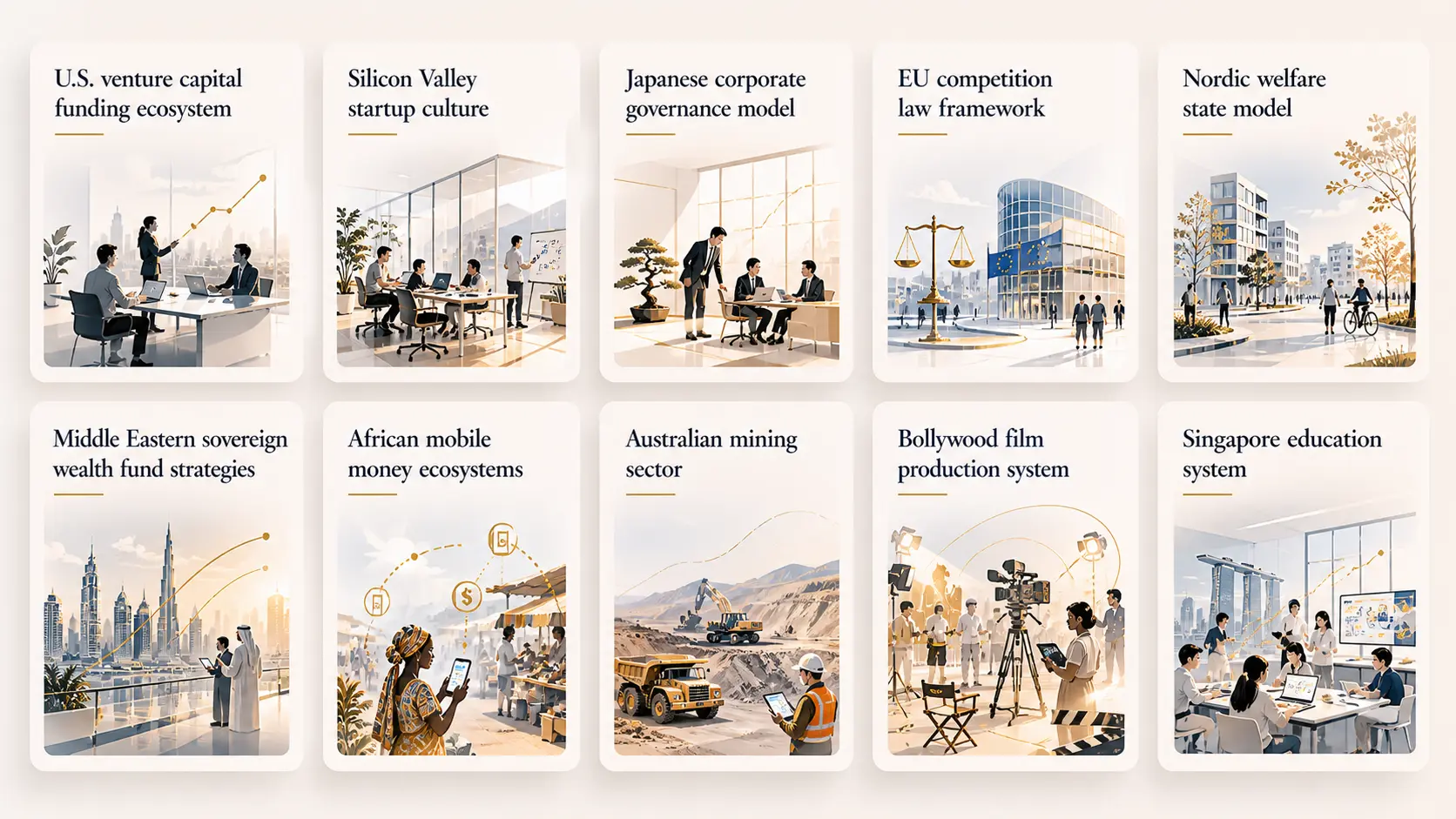
Contextual knowledge domains refer to structured bodies of knowledge that describe how activities, systems, and organisations function within particular industries, sectors, institutions, or geographic environments. Rather than focusing on general mechanisms that apply broadly, they address how these mechanisms take shape within concrete settings.
In these domains, knowledge is generally structured around the practices, institutional arrangements, operational processes, and regulatory frameworks that define a given field. For example, contextual knowledge may include understanding the luxury fashion industry, GCC cultural norms, EU data protection regulations (GDPR), international trade agreements, aviation safety standards, or pharmaceutical licensing processes.
Since these domains describe how systems operate within particular environments, their scope is inherently tied to the characteristics of those contexts. They provide the situational understanding that enables individuals to interpret how activities are organised within a domain, recognise the constraints and rules that shape it, and determine how actions should be adapted to operate effectively in that environment.
Decisions and actions never occur in abstract conditions. They take place within environments shaped by specific constraints, expectations, and behaviours. Contextual knowledge adds the understanding needed to interpret these environments and to apply concepts appropriately within them.
Without contextual knowledge, even strong conceptual understanding may lead to misinterpretation or ineffective decisions. By revealing how activities are organised and constrained within a particular setting, contextual knowledge allows individuals to adapt their reasoning and actions to the realities of the environment. The examples below illustrate contextual knowledge domains embedded in specific real-world environments and systems.
2.3 The Generative Skills
The foundational mental and emotional capacities that power the development of practical skills and the acquisition of knowledge.
At the foundation of human capability lie a set of primary inner capacities through which individuals analyse information, generate ideas, regulate their emotions, and understand others. The Unified Skills Map refers to these fundamental capacities as generative skills.
These capacities operate continuously whenever people think, learn, or respond to situations. Analysing a problem, forming an idea, adapting to new circumstances, managing emotions, or understanding another perspective all depend on the activation of these inner capacities.
For this reason, generative skills play a decisive role in the development of human capability. The acquisition of any knowledge and the mastery of any practical skills ultimately result from how these primary capacities are mobilized.
Generative skills consist of three fundamental capacities that drive human thinking and behaviour. The Analytical Capacity concerns the capacity to process information and draw sound conclusions. The Creative Capacity refers to the capacity to generate ideas and transform them into meaningful concepts. The Emotional Capacity relates to the capacity to understand, regulate, and respond effectively to emotions in oneself and in others.
2.3.1. The Analytical Capacity
The capacity to critically process information and draw logical conclusions.
Analytical Capacity refers to the capacity to work with information in a structured, rigorous, and meaningful way. It enables individuals to critically examine information, interpret complex situations, construct coherent reasoning, and reach conclusions that are logically grounded.
In many contexts, individuals are exposed to large amounts of information: data, reports, opinions, observations, or examples. However, access to information alone does not guarantee understanding. Without analytical capacity, information remains fragmented and difficult to interpret. Analytical capacity is what allows individuals to transform raw information into structured understanding and sound conclusions.
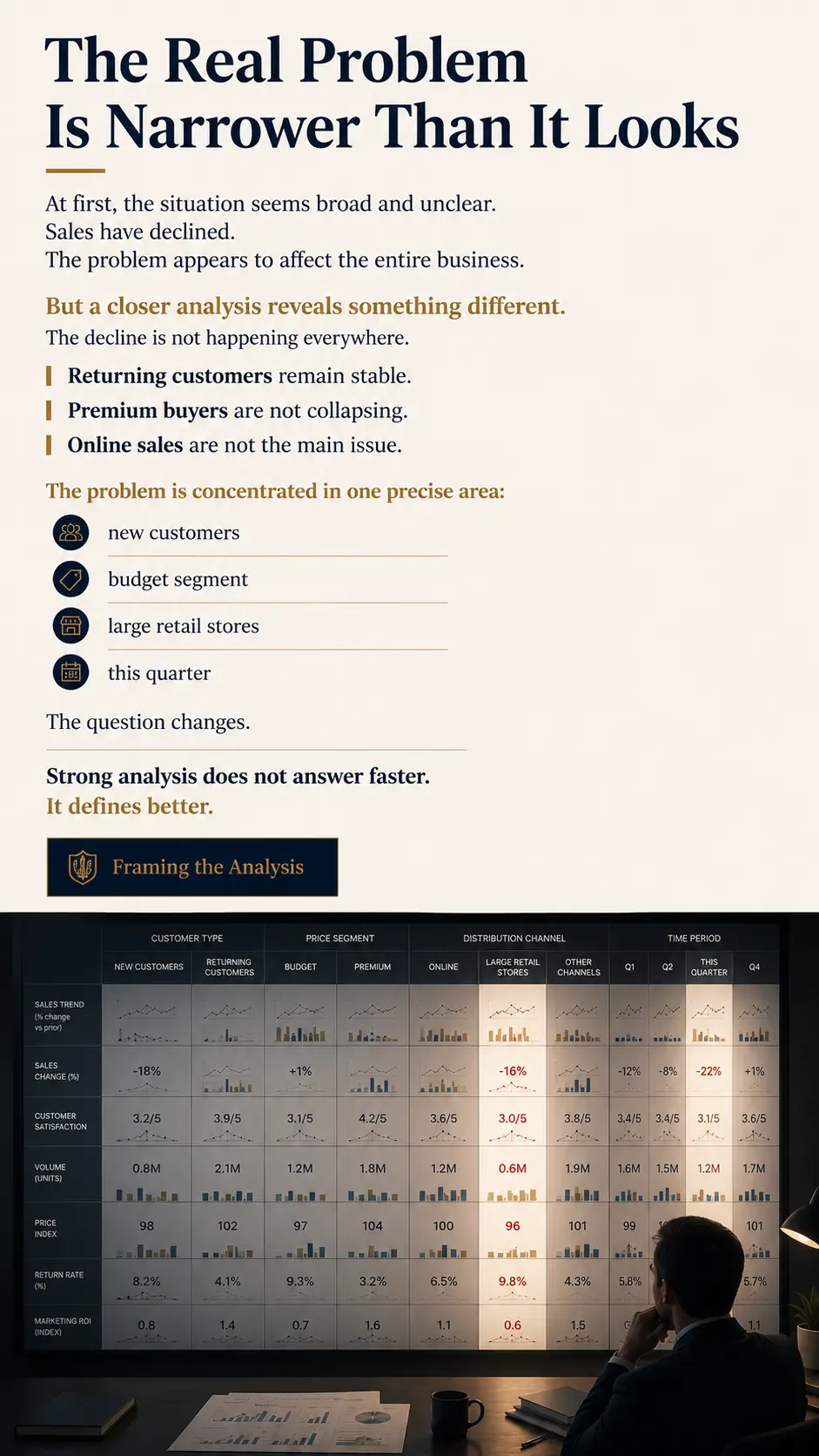
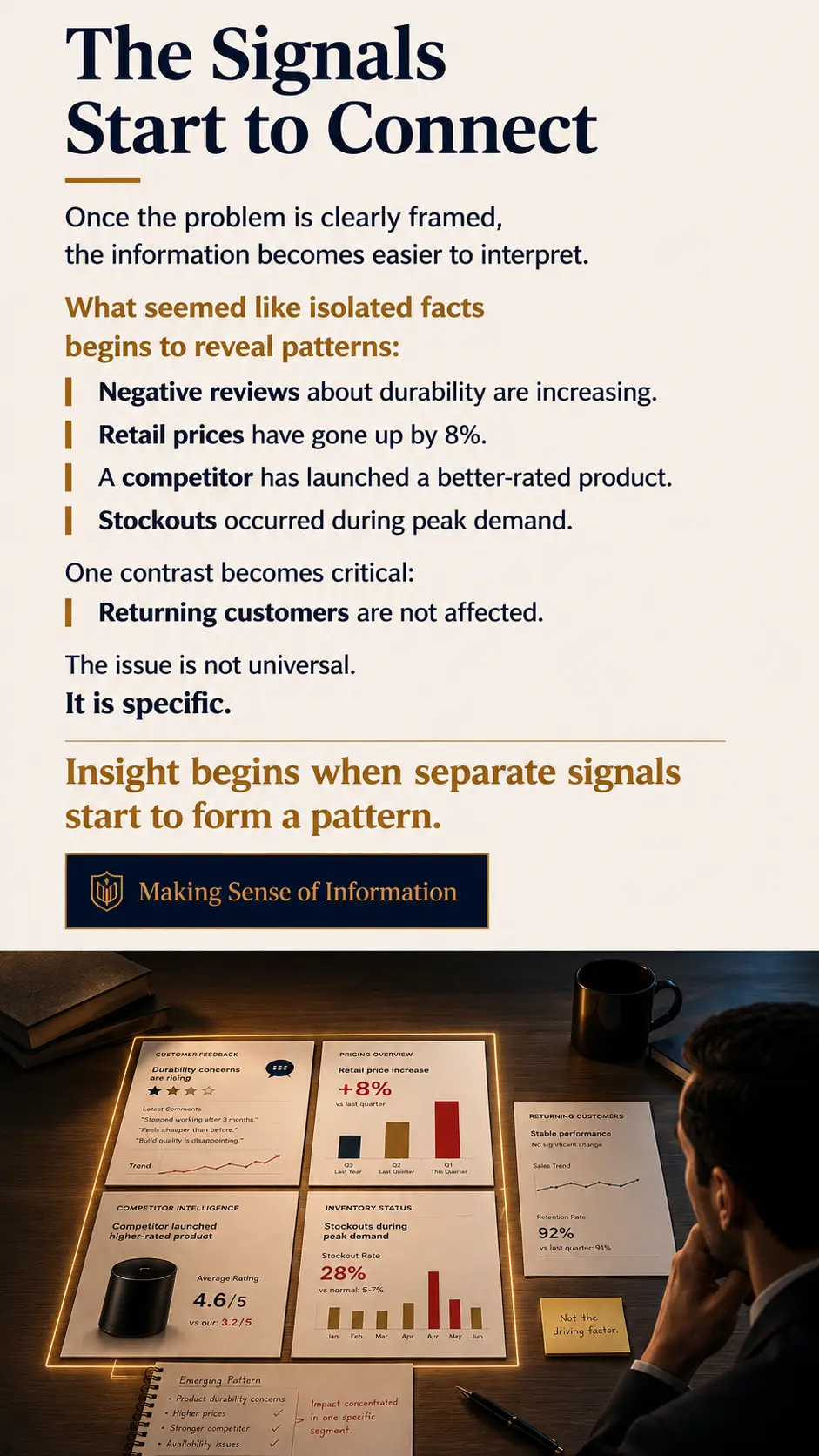
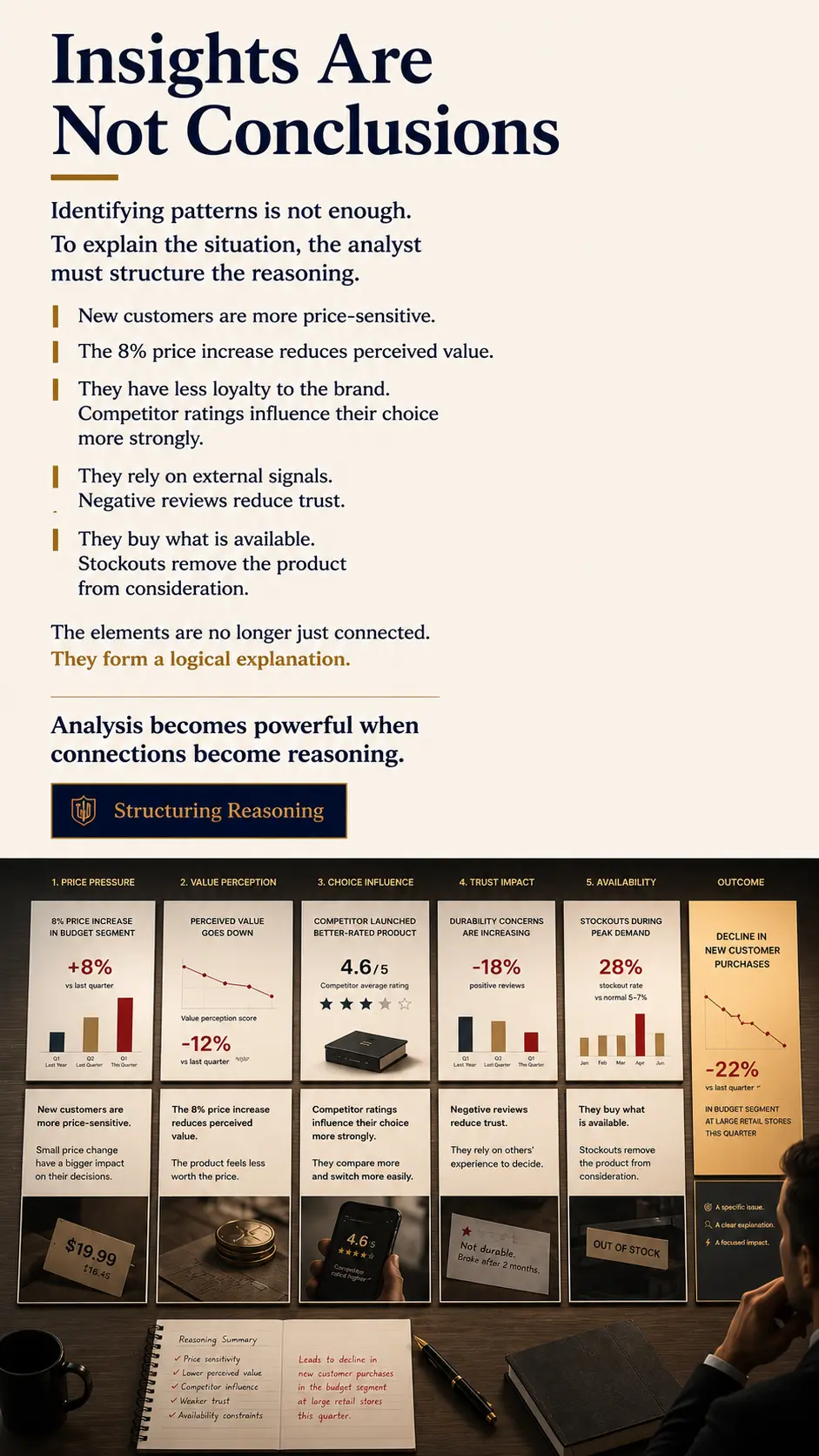
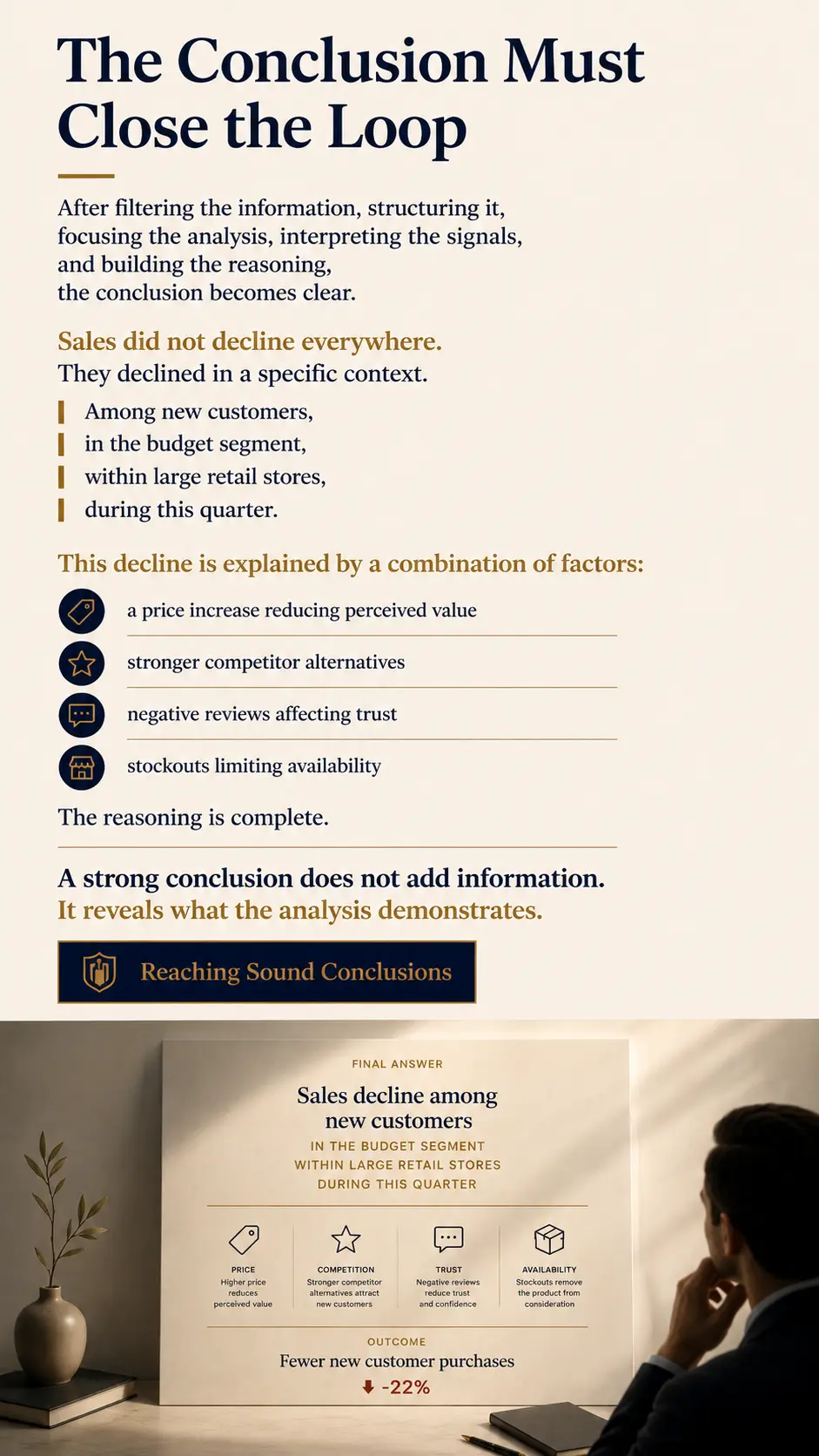
Within the Unified Skills Map, analytical capacity operates through a coherent analytical process structured around six interrelated dimensions: selecting relevant information, organizing information coherently, framing the analysis, interpreting information critically, structuring reasoning logically, and reaching sound conclusions.
Selecting information
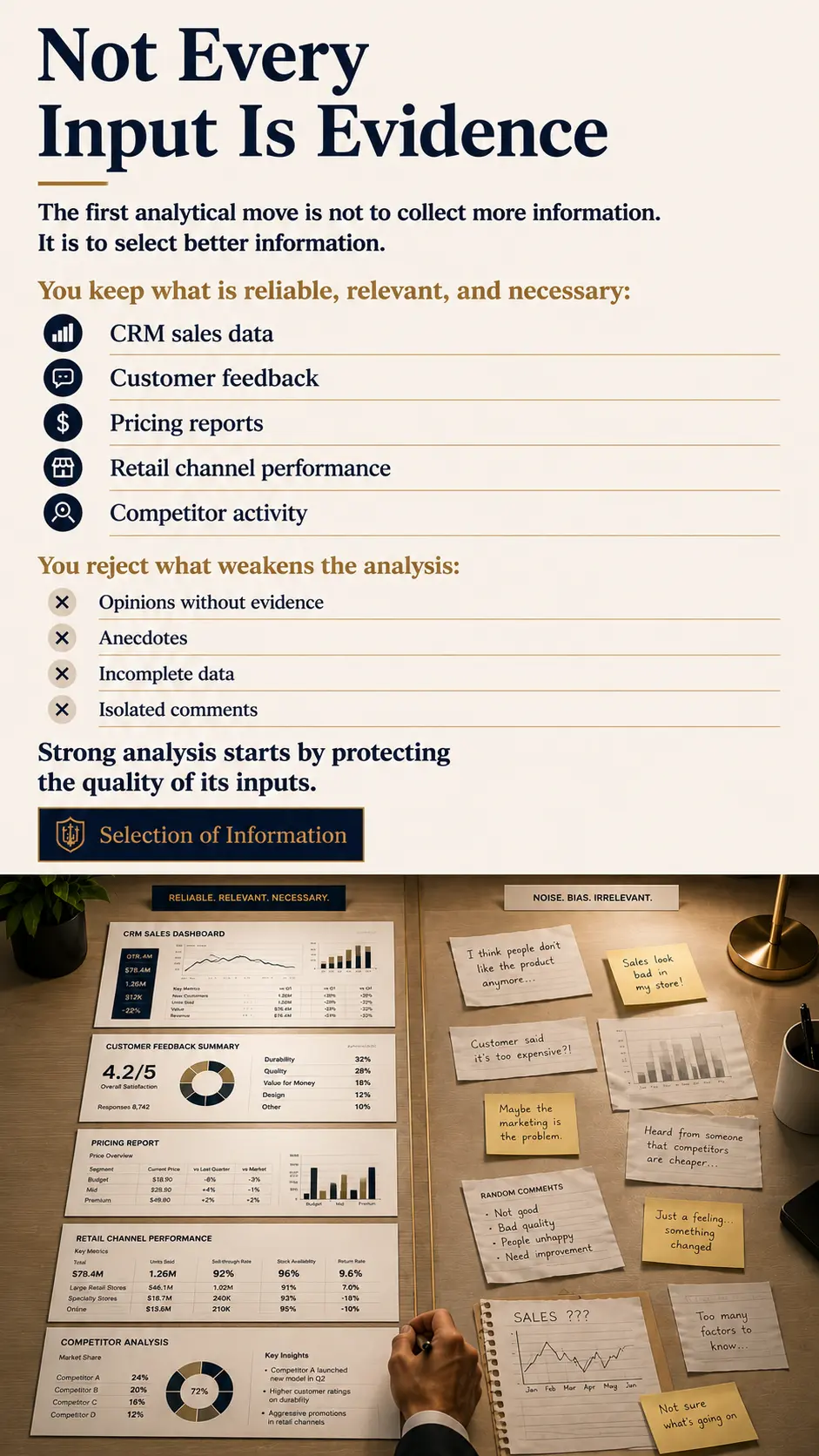
Selecting relevant information refers to the capacity to identify which information is reliable, relevant, and necessary for the analysis. In real-world situations, information is rarely presented in a perfectly curated form. It often includes noise, biases, incomplete data, or irrelevant details. Analytical work therefore begins with the ability to distinguish useful information from misleading or unnecessary inputs. This involves evaluating the credibility of sources, distinguishing facts from opinions or assumptions, and identifying which information is essential to address the analytical question. It also includes recognizing when the available information is incomplete and when additional evidence is needed. Since reliable conclusions depend on reliable inputs, selecting the right information is a foundational step in the analytical process.
Organizing information
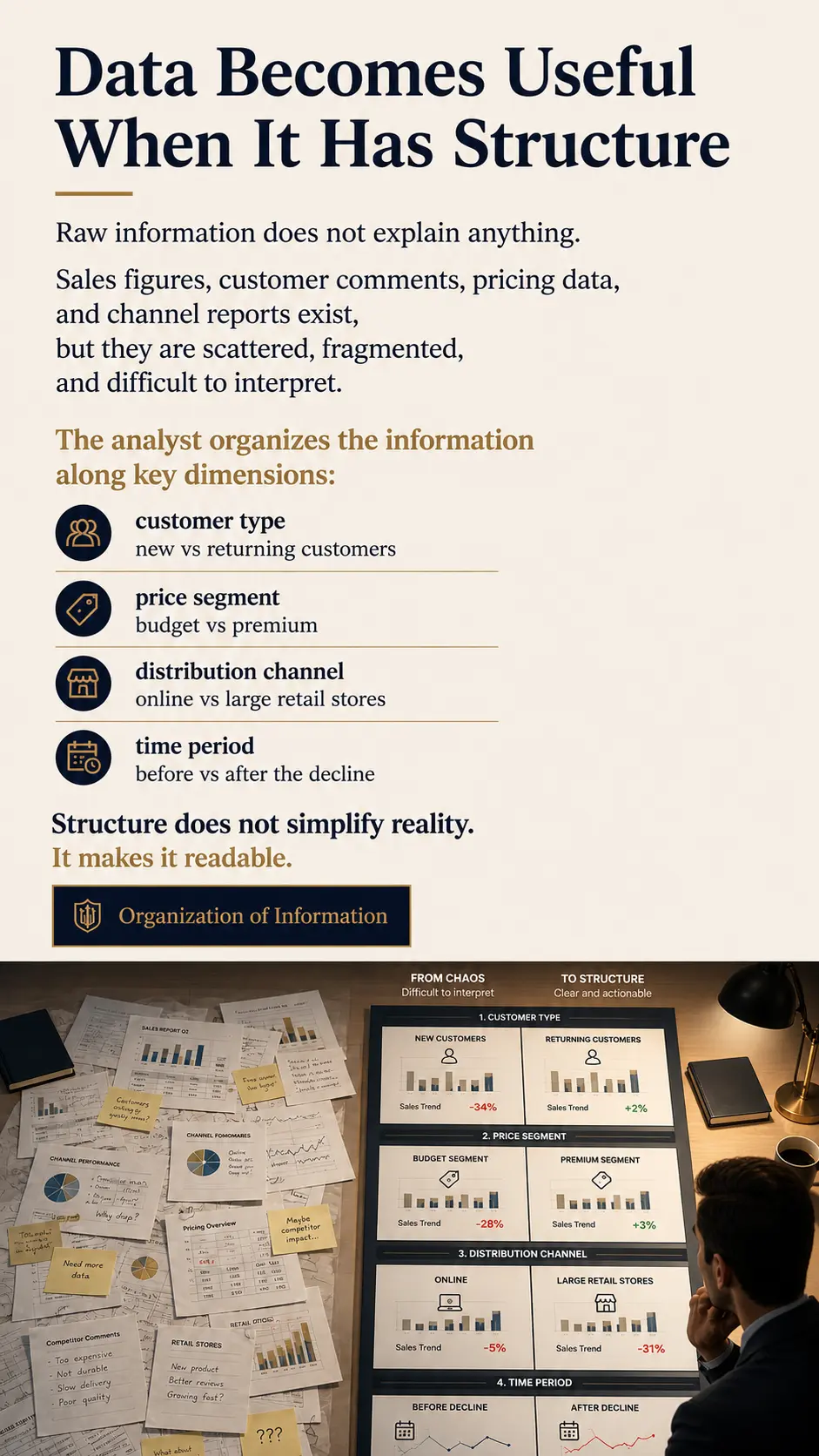
Once relevant information has been identified, it must be organized in a way that makes it intelligible and ready for analysis. Organizing information refers to the capacity to structure information so that key dimensions, relationships, and gaps become visible. Raw information is often scattered, complex, or difficult to interpret. Organizing it involves grouping elements into meaningful categories, simplifying complexity without losing essential content, and clarifying how different pieces of information relate to one another. Tools such as tables, charts, frameworks, or conceptual maps can support this process by making patterns and relationships easier to identify. Well-organized information reduces confusion, lowers cognitive load, and creates a stronger foundation for accurate interpretation and reasoning.
Framing the analysis
Framing the analysis refers to the capacity to define the focus, scope, and direction of the investigation. Even well-organized information can lead to weak conclusions if the analysis is directed toward the wrong question. Framing therefore involves narrowing the scope, identifying the most relevant analytical angle, and establishing clear boundaries for the investigation. This ensures that analytical effort remains focused on what truly matters. It helps distinguish central lines of inquiry from secondary distractions and clarifies what the analysis is intended to explain. A well-framed analysis provides the direction that allows reasoning to develop in a focused and coherent way.
Interpreting information
Interpreting information refers to the capacity to examine structured information and uncover meaningful patterns, relationships, or insights. At this stage, individuals identify trends, contrasts, anomalies, and connections within the available information. The objective is not yet to construct a full argument, but to understand what the information actually reveals. This process enables analysts to distinguish meaningful signals from noise and develop an initial interpretation grounded in the available evidence. Without this step, reasoning risks being built on assumptions rather than insight.
Structuring reasoning
Structuring reasoning refers to the capacity to connect insights logically and construct a coherent chain of thought. Once meaningful patterns have been identified, effective analysis requires linking them in a structured and logically consistent way. This involves examining relationships, exploring causal links, comparing alternative explanations, and ensuring that each step follows logically from the previous one. This step provides the logical backbone of the analysis. It ensures that conclusions emerge from coherent reasoning rather than isolated observations.
Reaching sound conclusions
Reaching sound conclusions refers to the capacity to formulate a final conclusion that follows logically from the reasoning. At this stage, the analytical process reaches its conclusion. The final conclusion must directly address the analytical objective that was initially framed and remain fully supported by the reasoning developed throughout the analysis. A sound conclusion does not introduce new information or unsupported claims. Instead, it clearly articulates what the reasoning demonstrates and closes the analytical loop. This final step ensures that the analytical process produces a clear, rigorous, and meaningful answer.
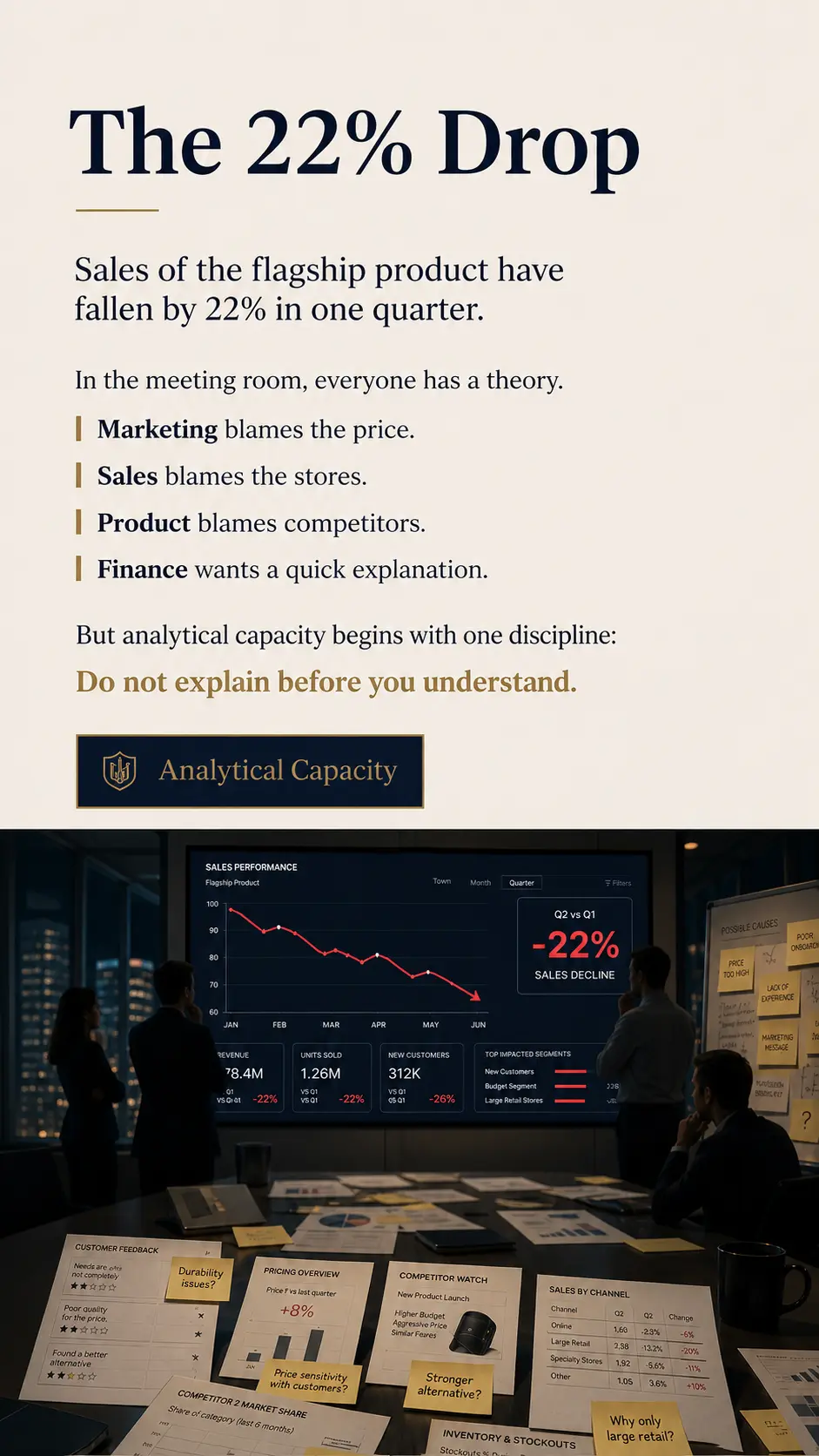
The example below immerses you inside a real analytical situation where nothing is immediately obvious. As the process unfolds, you will see how information is filtered, structured, focused, and interpreted, until a conclusion emerges that fully holds.
2.3.2. The Creative Capacity
The capacity to generate new ideas and transform them into meaningful concepts.
Creative Capacity refers to the capacity to move beyond existing solutions and produce new conceptual possibilities. It enables individuals to explore alternative perspectives, generate original ideas, develop emerging thoughts, and shape them into coherent concepts that can be understood, communicated, and applied.
In many situations, individuals rely on familiar patterns or established solutions when facing a problem. While such approaches may be effective in stable contexts, they can limit the ability to discover new directions or respond to novel challenges. Creative capacity allows individuals to expand the range of possible ideas, explore different conceptual paths, and transform emerging possibilities into meaningful conceptual forms.
Within the Unified Skills Map, creative capacity operates through a coherent creative process structured around six interrelated dimensions: opening the creative space, generating diverse ideas, exploring ideas’ potential, clarifying the idea, shaping the concept, and articulating value and applications.
Opening the creative space
Opening the creative space refers to the capacity to expand the cognitive space in which new ideas can emerge. When individuals approach a challenge or situation, their thinking is often constrained by existing assumptions, familiar frameworks, or implicit expectations about what is possible. Opening the creative space involves loosening these constraints in order to view the situation from different perspectives. This may involve reframing the problem, shifting viewpoints, questioning initial assumptions, or reconsidering the boundaries that shape the situation. By expanding the space of possible interpretations, individuals create broader conditions for new ideas to emerge. Without this expansion of perspective, creative thinking tends to remain confined to familiar patterns.
Generating diverse ideas
Generating diverse ideas refers to the capacity to produce multiple ideas that differ in direction, structure, or approach. Rather than refining a single idea too early, this stage focuses on generating a broad range of alternatives. These ideas may vary in their assumptions, mechanisms, objectives, or conceptual orientation. The emphasis at this stage is breadth rather than depth. By exploring substantially different possibilities, individuals avoid becoming locked into a single line of thought and expand the range of potential outcomes. A broader pool of ideas increases the likelihood that genuinely original or valuable concepts will emerge.
Exploring ideas’ potential
Exploring ideas’ potential refers to the capacity to envision how emerging ideas might evolve, expand, or lead to new possibilities. Ideas rarely reveal their full potential in their initial form. This stage involves imagining different trajectories an idea could take, considering possible applications, and examining the broader implications of developing it further. Individuals may explore how an idea could evolve, in which contexts it might become relevant, or what opportunities it could create. The objective is not yet to refine or select ideas, but to better understand their potential and identify promising avenues for further development. By extending ideas beyond their initial form, this process reveals possibilities that might otherwise remain unnoticed.
Clarifying the idea
Clarifying the idea refers to the capacity to refine an emerging idea so that its meaning becomes clear and precise. Ideas often begin as vague or loosely defined thoughts. This stage involves identifying the central meaning of the idea, distinguishing essential elements from secondary ones, and clarifying its underlying intention, significance, or direction. Through this process, ambiguity is reduced and internal inconsistencies are resolved. The idea becomes more coherent and sufficiently defined, creating a stronger foundation for further development. Without this clarification, ideas remain vague and difficult to develop effectively.
Shaping the concept
Shaping the concept refers to the capacity to give an emerging idea a clear conceptual form that can be understood, examined, and developed. This involves identifying the main components of the idea, defining how these components relate to one another, and organizing them into a structured representation. Conceptual forms may include diagrams, sketches, concept maps, outlines, or other representations that help make the idea more tangible. By giving the idea a coherent conceptual structure, individuals transform abstraction into something that can be examined, discussed, and developed further. Without this step, ideas remain intangible and difficult to communicate, refine, or apply.
Articulating value and applications
Articulating value and applications refers to the capacity to express the potential significance, relevance, and possible uses of a concept. At this stage, the concept is connected to its broader context. This involves identifying possible applications, explaining the value or significance the concept could create, and clarifying the needs, opportunities, or meanings it may address. By articulating its potential impact, individuals make the concept’s relevance explicit and provide direction for further development. When a concept’s value is clearly expressed, it becomes easier to evaluate, refine, communicate, and apply in meaningful contexts.
2.3.3. The Emotional Capacity
The capacity to understand and manage emotions in oneself and respond effectively to emotions in others.
Emotional Capacity refers to the capacity to perceive emotional signals, understand their origins, and respond to them in ways that support effective thinking, action, and interaction. Emotions influence attention, judgment, motivation, behavior, and interpersonal dynamics. When unmanaged, they can distort perception, impair decision-making, or disrupt performance and relationships. When understood and regulated effectively, they become a valuable resource that supports clarity, resilience, and constructive human interaction.
In many real-world situations, individuals operate under pressure, uncertainty, or interpersonal tension. Emotional capacity allows them to remain composed, interpret emotional dynamics accurately, and respond in ways that support effective action, stable relationships, and constructive interaction.
Within the Unified Skills Map, emotional capacity operates through a coherent emotional process structured around six interrelated dimensions: awareness of one’s emotions, understanding one’s emotions, regulating one’s emotions, awareness of others’ emotions, understanding others’ emotions, and responding to others’ emotions.
Awareness of one’s emotions
Awareness of one’s emotions refers to the capacity to notice and accurately identify emotional states as they emerge. Emotional signals often appear through shifts in mood, energy, attention, or physical tension. Emotional awareness involves detecting these signals early and recognizing them before they unconsciously shape thinking or behavior. This may include recognizing emotions such as frustration, anxiety, excitement, or calmness, as well as noticing the physical or cognitive markers associated with these emotional states. Without emotional awareness, individuals are more likely to react automatically rather than respond deliberately.
Understanding one’s emotions
Understanding one’s emotions refers to the capacity to identify what triggers emotional states and how they influence perception, thinking, and behavior. Once emotions are recognized, individuals must understand why they emerged and how they shape their responses to situations. This involves identifying internal or external triggers, recognizing recurring emotional patterns, and understanding how emotions influence attention, interpretation, judgment, and action. This step transforms simple awareness into emotional insight. Individuals move from merely noticing an emotion to understanding its origins and its behavioral implications. Such understanding reduces confusion and enables more deliberate and effective emotional responses.
Regulating one’s emotions
Regulating one’s emotions refers to the capacity to manage emotional states in ways that support effective and constructive action. Rather than simply suppressing emotions, this involves recognizing emotional energy and directing it in adaptive ways. Individuals may stabilize emotional intensity, redirect discomfort toward constructive responses, or cultivate emotional states that reinforce motivation, resilience, or composure. Emotional regulation is therefore not limited to avoiding negative reactions. It also involves using emotional states as a resource that can support clarity, persistence, and effective action. When individuals learn to regulate their emotions effectively, emotional states become a source of strength rather than disruption.
Awareness of others’ emotions
Awareness of others’ emotions refers to the capacity to detect emotional signals expressed by other people. These signals often appear through tone of voice, facial expressions, body language, pace of speech, or shifts in behavior. This involves noticing emotional cues and recognizing signs that reflect the emotional states of others. This may include detecting signs of enthusiasm, hesitation, tension, frustration, or anxiety. Without this awareness, individuals may overlook important emotional signals that shape interactions and influence how situations unfold.
Understanding others’ emotions
Understanding others’ emotions refers to the capacity to interpret the causes and underlying dynamics shaping another person’s emotional state. This involves identifying what may have triggered the emotion, recognizing the concerns, expectations, or pressures behind it, and understanding how these emotional states influence behavior, communication, and interaction. Individuals may consider situational factors, fears, motivations, or interpersonal dynamics that shape the emotional responses of others. By understanding these dynamics, individuals reduce the risk of misinterpretation and respond with greater accuracy and emotional sensitivity.
Responding to others’ emotions
Responding to others’ emotions refers to the capacity to adapt one’s behaviour in ways that acknowledge emotional states and support constructive interaction. At this stage, emotional understanding is translated into interpersonal action. Individuals may adjust their tone, timing, communication style, or behaviour to reduce tension, create psychological safety, and maintain constructive dialogue. They may calm a tense conversation, reinforce confidence, encourage motivation, or help redirect emotional energy toward more constructive interaction. Through this capacity, individuals influence the emotional climate of interactions and help maintain conditions that support trust, cooperation, and effective human engagement.
At this point, the three generative skills have been defined as the inner capacities that allow individuals to analyse, create, regulate themselves, and respond to others. The next question is not what these capacities are, but where they sit within the wider architecture of human capability. If generative skills remain presented alone, the model risks looking like another clean classification of skills. Useful, but incomplete. The real strength of the Unified Skills Map appears when these capacities are connected to the other two dimensions of capability: knowledge domains and practical skills. Generative skills are the starting point because they make learning and skill development possible. Knowledge domains give individuals the content and context they need to understand situations. Practical skills show how capability becomes visible through concrete action. The conceptual framework below shows this architecture. It prepares the next section, where the Unified Skills Map is explained not as a simple classification, but as a dynamic working system for understanding how human capabilities are built, activated, and strengthened over time.

3. the usm as a dynamic system
3.1 Under the hood of human capability
The Unified Skills Map organises human capabilities into three categories: practical skills, knowledge domains and generative skills. Each category captures a distinct dimension of capability. Practical skills describe what individuals are able to do in concrete situations. Knowledge domains describe what individuals understand about how things work. Generative skills describe the foundational capacities that enable individuals to acquire knowledge and develop practical skills.
Taken together, these three dimensions form a coherent system. Human capability does not develop through isolated elements that accumulate independently. It develops through the continuous interaction between foundational capacities, knowledge acquisition and practical action. Understanding this interaction is essential because it reveals how individuals learn, perform and progressively expand their capabilities over time.
At the starting point of this system are generative skills. Every human being begins with foundational mental and emotional capacities. These capacities form the inner potential through which individuals are able to think, learn, create, regulate themselves, understand others and act in the world. They are not all expressed with the same intensity in every person. Some individuals may find it easier to activate certain capacities, while others may need more effort, more practice or more support. Yet in all cases, these generative skills represent the foundation from which human development begins.
From these foundational capacities, individuals can acquire knowledge. Learning a concept, understanding a theory, discovering an industry, interpreting a culture, or making sense of a specific organisational environment all require the activation of generative skills. To learn, individuals must process information, identify meaning, connect ideas, remain focused, tolerate confusion and progressively build understanding. In other words, knowledge is not simply received. It is constructed through the activation of analytical, creative and emotional capacities.
The same logic applies to practical skills. Individuals do not learn to perform concrete actions by magic. They develop practical abilities by activating their generative skills and directing them toward action. Whether someone learns to write a professional report, present an argument, use a digital tool, analyse a market, manage a project, negotiate with a client or solve an operational problem, the visible action depends on invisible capacities. Behind every practical skill, there is analytical effort, creative adaptation and emotional regulation.
This is why practical skills are never isolated from generative skills. A practical skill may be visible, but it is powered by deeper capacities. For example, presenting a business case is not only the ability to speak in front of an audience. It requires understanding the content, structuring the message, selecting the relevant evidence, adapting to the audience, managing pressure and communicating with clarity. The practical skill appears in the performance, but the performance is made possible by the activation of generative skills.
Knowledge and practical skills also reinforce each other. Knowledge supports action because it gives individuals the understanding needed to act intelligently. A person who understands finance, marketing, psychology, law, engineering or culture can act with more precision in situations related to those domains. Without knowledge, practical action can become shallow, mechanical or poorly adapted to the context.
But the reverse is equally important. Practical skills also support the development of knowledge. When individuals act, apply, test, build, present, negotiate, analyse or create, they do not only perform. They learn. Practical experience exposes them to real constraints, unexpected reactions, specific contexts and concrete consequences. It transforms knowledge from something understood in theory into something tested in reality. Through action, knowledge becomes sharper, deeper and more usable.
At the centre of this interaction, generative skills remain the engine. They allow individuals to learn knowledge, to develop practical skills, and to use one to strengthen the other. When individuals mobilise knowledge to improve practical action, they activate their generative skills. When they use practical experience to deepen knowledge, they activate their generative skills again. These capacities are therefore not only the starting point of development. They are the operating power of the whole system.
This creates a virtuous cycle. The more individuals activate their generative skills to acquire knowledge and develop practical skills, the more these generative skills themselves become stronger. Analytical capacity grows through repeated analysis. Creative capacity grows through repeated idea generation, problem framing and concept development. Emotional capacity grows through repeated exposure to pressure, uncertainty, feedback and interaction. By using these capacities, individuals train them. By training them, they increase their ability to learn more, act better and adapt faster.
This is where the Unified Skills Map becomes especially powerful. It does not only show what a person knows or what a person can do. It also reveals the deeper capacities that make future growth possible. Practical skills and knowledge describe current capability. Generative skills indicate developmental potential. They show whether an individual is able to keep learning, keep adapting and keep building new capabilities when the context changes.
A system becomes truly valuable when its practical implications become clear. Once the internal logic of the Unified Skills Map is understood, the next step is to examine why this architecture matters for employability, higher education, and long-term capability development.
3.2 From capability to employability
This matters because modern employability is not only about possessing a fixed list of skills. Jobs evolve. Tools change. Industries transform. Organisations face new problems. In such an environment, the decisive question is not only: What skills does this person have today? The deeper question is: Can this person continue to learn, adapt and develop the skills required tomorrow?
Generative skills answer this question. They represent the human powerhouse behind adaptability, flexibility and lifelong development. They explain why some individuals can move across contexts, acquire new knowledge, develop new practical skills and continue to progress when the environment becomes unfamiliar. In a changing world, this is not a secondary asset. It is one of the most valuable dimensions of human capability.
This also explains why employers often value these capacities so highly, even when they do not always name them clearly. Employers need people who can analyse complex situations, learn quickly, generate solutions, manage uncertainty, work with others and adapt to new realities. They need people who can not only execute existing tasks, but also grow with the organisation. In practical terms, they are looking for generative skills because generative skills make future performance possible.
This point is particularly important for higher education. Universities do not only provide students with initial practical skills and domain knowledge. At their best, they provide a training ground for generative skills. Through assignments, projects, presentations, case studies, discussions, internships, assessments and feedback, students repeatedly activate their analytical, creative and emotional capacities. They learn to understand, think, create, communicate, regulate themselves and respond to complexity.
Yet this is also one of the great missed opportunities of higher education. Students often leave university with more generative development than they realise, but they struggle to identify it, describe it and communicate it. They may say they completed a project, wrote an essay, delivered a presentation or passed an assessment, but they do not always see the deeper skill architecture behind those experiences. They struggle to articulate what practical skills they developed, what knowledge they acquired, and which generative skills they mobilised and strengthened.
This difficulty is also reflected in employer surveys. Evidence from the Employer Satisfaction Survey conducted by the Quality Indicators for Learning and Teaching (QILT), a suite of government-endorsed surveys monitoring higher education outcomes, reveals an interesting pattern. Employers tend to evaluate graduates’ preparation more positively than graduates evaluate it themselves. In the survey, 86.4% of graduates reported feeling well or very well prepared for their job, while 94.9% of employers considered that graduates were well or very well prepared for their role. In other words, employers appear to recognise graduates’ readiness even more clearly than graduates recognise it themselves.
The Unified Skills Map helps make this hidden development visible. Any meaningful learning experience, assessment, project or achievement can be translated through the three dimensions of the system. It can show the practical skills developed, the knowledge domains acquired or applied, and the generative skills mobilised and strengthened. In simple terms:
One achievement = practical skills developed + knowledge domains acquired + generative skills improved
The same logic applies from the employer side. Any job, mission or responsibility can also be analysed through the same structure. It requires practical skills to perform the work, knowledge domains to understand the context, and generative skills to adapt, solve problems and continue improving. In simple terms:
One role = required practical skills + required knowledge domains + required generative skills.
This is the systemic value of the Unified Skills Map. It creates a shared structure between education, individuals and employers. Students can better understand and communicate what they have developed. Educators can design learning experiences that intentionally develop all three dimensions. Employers can describe roles and expectations with greater precision. The same reference system can therefore be used to describe learning, assess development, communicate value and understand employability.
Ultimately, the Unified Skills Map shows that human capability is not a flat list of skills. It is a living system. Generative skills allow individuals to acquire knowledge and develop practical skills. Knowledge and practical skills reinforce each other through use and experience. Each new learning experience strengthens the generative capacities that make further learning and adaptation possible.
This is why the system is never closed. The more individuals learn and act, the more they can develop the capacities that allow them to learn and act again at a higher level. This continuous loop is the essence of human development. It is also the reason why skills should not only be mapped as possessions, but understood as a dynamic process of growth.
Concluding Remarks
Treating skills articulation as a simple employability exercise misses the depth of the problem. Improving a resume, preparing stronger interview answers or polishing a LinkedIn profile may help students present themselves better, but these practices remain surface-level interventions when the underlying structure of skills is unclear.
The real issue is structural and sits deeper in the education-to-employment chain.
In a labour market increasingly shaped by skills-based hiring, digital portfolios, micro-credentials, AI-enabled recruitment and lifelong reskilling, capabilities must become visible, portable and legible. What individuals know, what they can do, and what they are capable of developing must be expressed in a form that can move across learning environments, recruitment processes, professional roles and future career transitions.
Skills articulation has therefore become part of the infrastructure of employability. Its importance extends beyond individual self-presentation. It affects how universities design learning, how students understand their development, how employers evaluate talent, how governments imagine policies, and how digital systems match people with opportunities.
The World Economic Forum (2025) similarly highlights that human-centric skills remain difficult to assess, develop and credential, especially when frameworks, assessment tools and recognition pathways are not sufficiently standardized. This reinforces a central point of this article: the value of skills is weakened when the language used to define, develop, assess and recognise them remains fragmented.
The fragmentation is highly costly. A student cannot clearly articulate a skill that has not been named. A university cannot systematically develop a skill that has not been mapped. An employer cannot reliably assess a skill that has not been defined. A government cannot build a credible policies if the underlying categories are unstable. A digital platform cannot match talent and opportunity if the skills data are inconsistent.
The fragmentation weakens the entire education-to-employment chain: identification, development, assessment, communication, recruitment and lifelong learning.
The Unified Skills Map was developed to respond to this structural challenge. Its ambition is simple, but demanding: to provide a clear, practical, comprehensive and systemic reference structure that helps individuals and organisations describe human capabilities with greater precision and consistency. By organising skills around three major dimensions, practical skills, knowledge domains and generative skills, the USM offers a structure that is simple enough to use and strong enough to capture the full architecture of capability. Its value lies in this balance.
It is clear because it reduces confusion around overlapping labels. It is practical because it can be applied to real learning experiences, assessments, projects, achievements, jobs and responsibilities. It is comprehensive because it captures what individuals can do, what they know, and the foundational capacities that allow them to learn and grow. It is systemic because it shows how these dimensions interact rather than treating skills as isolated items on a list.
This matters even if skills articulation is not the only cause of the skills gap. The skills gap is obviously not a single-cause problem. It is shaped by curriculum design, labour-market change, student engagement, employer expectations, institutional constraints, economic conditions and many other factors. But this does not reduce the importance of skills articulation. It makes it even more necessary.
Even if poor skills articulation explains only part of the gap, improving it can still create value across the whole system. It can help students understand what they have developed. It can help educators design learning with clearer developmental intent. It can help employers express what they actually need. It can help institutions connect learning outcomes with evidence of capability. It can help governments and platforms build more credible skills infrastructures.
In simple terms, improving skills articulation has very little downside and significant potential upside. It may not solve the entire skills gap by itself, but it can make the gap easier to see, easier to discuss and easier to address.
However, the Unified Skills Map should not be used as a tool for each stakeholder to work in isolation. A shared language only becomes powerful when it is actually shared. The point is not for students, universities and employers to use the same map separately in their own corners. The point is to create a common reference through which they can better understand one another.
This is particularly important for higher education. Universities cannot fully address employability alone. They can design rigorous programmes, develop meaningful assessments and create valuable learning experiences, but employability becomes stronger when academic learning is connected to industry realities. This requires dialogue with employers, not only to understand skill needs, but also to understand work contexts, constraints, expectations and emerging forms of practice.
Industry collaboration should therefore move beyond occasional guest talks or symbolic partnerships. The deeper opportunity lies in designing learning experiences where academic rigour and professional relevance reinforce each other. Work-integrated learning, live projects, employer challenges, internships, applied assessments and reflective portfolios can become far more powerful when they are structured around a shared map of capability.
The USM can support this work by giving stakeholders a common base for design and dialogue. Employers can express what a role requires in terms of practical skills, knowledge domains and generative skills. Educators can translate these requirements into learning activities and assessments. Students can use the same structure to understand what they are developing, gather evidence and communicate their growth.
A project with an employer should therefore produce more than a presentation, a grade or a completed deliverable. It should leave students with a clearer understanding of the practical skills they developed, the knowledge they acquired or applied, and the generative skills they mobilised and strengthened. Without this translation, valuable learning can happen and still remain partially invisible. That is a waste. A very common one.
The same logic applies to employment. A job description should go beyond generic requirements and fashionable keywords. It should clarify the practical skills needed to perform the work, the knowledge domains required to understand the context, and the generative skills needed to adapt, solve problems and grow with the role. This would make expectations clearer, recruitment more precise and development more intentional.
This article remains an introduction. The title matters: Introduction to the Unified Skills Map. The objective here was to establish the foundation, not to pretend that all implementation questions are settled. The objective here was not to close the discussion, but to establish a strong foundation for it. The next challenge is to operationalize the model with the same level of clarity, simplicity and impact.
How should the USM be integrated into the student learning journey? How should it inform programme design, course design, assessment design and feedback practices? How can it support reflective activities without becoming a bureaucratic burden? How can students use it to build stronger portfolios and more credible employability narratives? How can employers translate role requirements through the same structure? How can the model support early-career graduates, experienced professionals and staff development? How should these capabilities be assessed qualitatively, quantitatively, visually, digitally and experientially?
These questions define the next frontier.
The strength of the Unified Skills Map is that it was designed to support this future work. It provides a stable foundation without imposing rigidity. It gives a common structure while leaving enough flexibility for different sectors, institutions, roles and learning contexts. It allows all skills to be mapped with clarity and precision, while still recognising that capabilities develop through diverse experiences and pathways.
This flexibility is essential. A framework that is too vague cannot guide action. A framework that is too rigid cannot survive reality. The USM must sit between these two failures. It must be stable enough to create shared meaning and flexible enough to be useful in the real world.
This is the direction we are now developing. Our current work follows a multichannel vision. Knowledge materials, practical tools, technological solutions and live learning experiences all have a role to play. The priority is not to defend one format as superior. The priority is real impact. Sometimes the right solution will be a clear framework. Sometimes it will be a digital platform. Sometimes a live industry challenge. Sometimes a reflective portfolio. Sometimes a redesigned assessment. Often, the strongest impact will come from the intelligent combination of several channels.
The guiding principle is simple: the method must serve the impact.
No intellectual decoration for its own sake. No unnecessary complexity. No ideological attachment to one format, one technology or one pedagogical fashion.
The only serious agenda is positive impact: helping more individuals understand their capabilities, helping more educators develop them intentionally, helping more employers recognise them accurately, and helping the education-to-employment system become clearer, fairer and more effective.
The skills gap will not be closed by blaming universities, students or employers. It will not be solved by multiplying labels, dashboards or credentials without a clear underlying structure. It will be addressed when human capability becomes easier to name, easier to develop, easier to evidence, easier to trust and easier to grow.
That is the purpose of the Unified Skills Map.
To make skills visible without reducing their richness.
To make development structured without making it rigid.
To make employability practical without making it shallow.
To give individuals, educators and employers a shared language for something they all care about, but too often describe from different worlds.
Because in the end, the real objective is not simply to map skills. It is to help human potential become clearer, stronger and more transferable across the many learning and working journeys that shape a life.
REFERENCES
Aghazadeh, M. (2019). Assessment of 21st century skills: A literature review. Ministry of Education, Singapore.
Australian Government Department of Education, & Australian Government Department of Employment and Workplace Relations. (2024). National skills passport: Consultation paper. Australian Government.
Department for Education. (2023). A skills classification for the UK.
Doherty, I., & Zhang, L. (2026). Skills taxonomies in higher education. University of New South Wales.
European Commission. (n.d.). ESCO: European skills, competences, qualifications and occupations.
Healy, M. (2023). Careers and employability learning: Pedagogical principles for higher education. Studies in Higher Education, 48(8), 1303–1314.
Joynes, C., Rossignoli, S., & Fenyiwa Amonoo-Kuofi, E. (2019). 21st century skills: Evidence of issues in definition, demand and delivery for development contexts. K4D / Institute of Development Studies.
McGuinness, S., Pouliakas, K., & Redmond, P. (2018). Skills mismatch: Concepts, measurement and policy approaches. Journal of Economic Surveys, 32, 985–1015.
Mourshed, M., Patel, J., & Suder, K. (2014). Education to employment: Getting Europe’s youth into work. McKinsey Center for Government.
OECD. (2017). Getting skills right: Skills for jobs indicators. OECD Publishing.
Osmani, M., Weerakkody, V., Hindi, N., & Eldabi, T. (2019). Graduates employability skills: A review of literature against market demand. Journal of Education for Business, 94(7), 423–432.
Pollard, E., Hirsch, W., Williams, M., Buzzeo, J., Marvell, R., Tassinari, A., et al. (2015). Understanding employers’ graduate recruitment and selection practices: Main report. University of Sussex.
Rahman, N., & Lakey, E. (2023). Learning to learn: Empowering students to articulate the value of their HASS degree. Journal of University Teaching and Learning Practice, 20(4), 1–14.
Rikala, P., Braun, G., Järvinen, M., Stahre, J., & Hämäläinen, R. (2024). Understanding and measuring skill gaps in Industry 4.0: A review. Technological Forecasting and Social Change, 201, 123206.
Skills England. (2026). UK standard skills classification development report.
Spence, M. (1973). Job market signaling. The Quarterly Journal of Economics, 87(3), 355–374.
Tight, M. (2023). Employability: A core role of higher education? Research in Post-Compulsory Education, 28(4), 551–571.
Tomasson Goodwin, J., Goh, J., Verkoeyen, S., & Lithgow, K. (2019). Can students be taught to articulate employability skills? Education + Training, 61(4), 445–460.
University of New South Wales. (2026). ADA skills passport: A framework for capturing and communicating student skills.
World Economic Forum. (2021). Building a common language for skills at work: A global taxonomy. World Economic Forum.
World Economic Forum. (2025). New economy skills: Unlocking the human advantage. World Economic Forum.